


The Pelvis
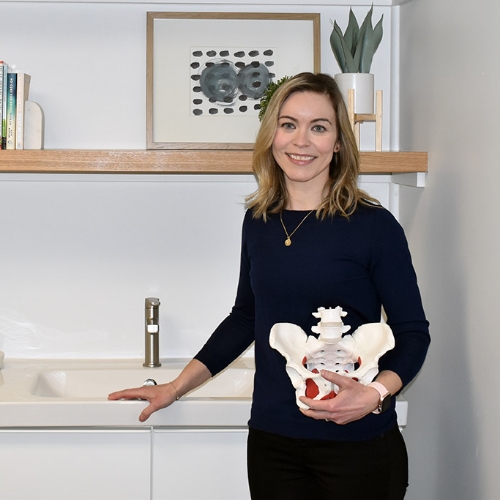
The pelvis is a region of the body that acts as a driver for movement, allowing you to transfer weight from your spine to your lower limbs. It consists of two large bones (formed from the ilium, ischium, and pubis), the sacrum and the coccyx. There are 36 muscles that attach to the pelvis that must work in conjunction with ligaments, tendons and fascia to promote healthy bodily function. This system also acts to support your pelvic organs, assist with bladder and bowel control, and facilitate proper posture, movement and breathing patterns.
What is Pelvic Health?
Pelvic health consists of much more than just the basic anatomy found “below your belt.” The pelvic structures listed above are greatly influenced by your movement patterns, sleep hygiene, stress management, and nutrition. Pelvic pain and dysfunction can also result from injuries acquired during prenatal and post-partum periods, sports injuries, falls, surgical procedures or as a result of chronic breathing abnormalities. This can lead to various kinds of pelvic dysfunction such as:
- Chronic hip and low back pain
- Urinary incontinence (stress, urge, and mixed)
- Pelvic organ prolapse
- Fecal incontinence
- Sexual dysfunction
- Chronic pelvic pain
- Sacroiliac (SI) joint pain
- Pubic symphysis pain
- Pelvic venous disorders
Each of these diagnoses can be addressed and treated effectively with pelvic physical therapy. The Pelvic Health & Performance Center examines each patient’s unique experience from a holistic perspective, taking the entire person and their unique goals into account. This approach, along with patient education, behavioral changes, and exercise will leave you feeling supported and empowered to make the changes you need to improve your social, psychological, physical, and sexual well-being.
Can’t I Just do Kegels?
Kegels are not a one-size-fits-all exercise. There are instances where Kegels can create additional pain or encourage dysfunctional patterns if they are done incorrectly or are not actually necessary.
Research has shown that 70%- 80% of people perform a Kegel incorrectly prior to having thorough, supervised training with a therapist.[1] Even with proper education from a trained professional, more than 30% of people still struggle to perform this technique correctly![2]
By working with a trained pelvic therapist, you can determine if this is an appropriate exercise for you, and how you can use it to enhance your pelvic health
[1] Nguyen, L, et. al. (2019). Now anyone can kegel: one-time office teaching of pelvic floor muscle exercises. Female pelvic medicine & reconstructive surgery, 25 (2): 149-153. [2] Bø, K, Herbert RD. (2013). There is not yet strong evidence that exercise regimens other than pelvic floor muscle training can reduce stress urinary incontinence in women: a systematic review. J Physiother, 59: 159-168.
Please Note, we do not contract with any insurance providers.
We are a small, fee-for-service center. In order to provide one-to-one, high-quality care, we are out of network with all insurance including Medicare and Medicaid.
We accept Visa and MasterCard — upon booking your appointment, you will be asked to securely enter your credit card information for your convenience. Your card will automatically be charged after your appointment is completed.
Appointments not kept or canceled without 24 hours notice prior to the scheduled appointment time will be charged a $150.00 cancellation fee.
